Who, why, and what
Before adding features, I found out who used Digiit and what they kept asking for.
Research
I started with FUNDiT's operations team, who worked in the MVP every day. Then I pulled the questions customer support heard most often. Most calls asked for information the system already had.
What people kept asking
From operations interviews and about 40 support messages a day.
- “When is my next repayment due?”
- “How much do I still owe?”
- “How much more can I borrow?”
- “Has my loan been approved yet?”
- “Why was this amount deducted from my salary?”
- “Can I take a top-up loan?”
- “Which of my staff have active loans?”
- “Is this person eligible?”
- “Was this month's deduction taken?”
- “How much do we deduct from payroll this month?”
- “Which loan requests are waiting for my approval?”
- “Who is about to finish repaying?”
- “Who is behind on payments right now?”
- “Which companies carry the most risk?”
- “How much did we disburse this month?”
- “Which applications were started but never finished?”
- “Which repayments haven't landed yet?”
- “What's our total outstanding balance?”
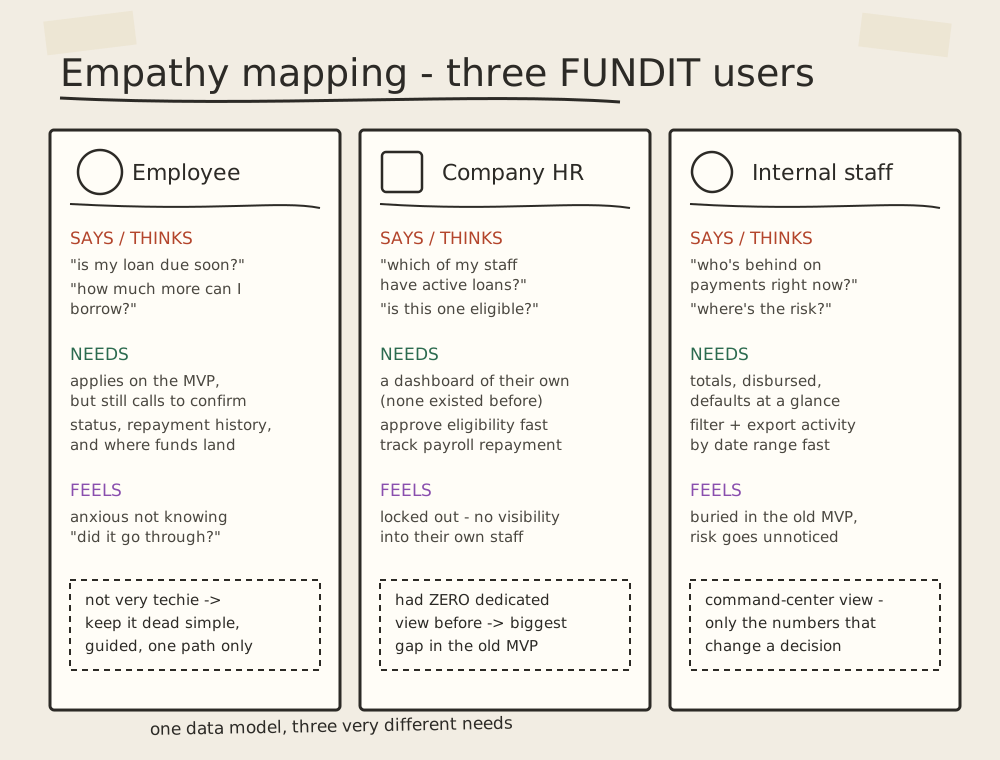
Who uses it, and what was missing.
Scope
The first release answered the questions we heard most: what employees asked customer support, what HR teams asked us, and what our operations team couldn't work out on their own. Auditing, deeper customer-data analysis, and loan security and compliance waited for a later version, because we had no existing platform to model them on.
Structure and flows
One data model underneath, a separate home screen for each user on top.
A home screen for every user.
All three dashboards read the same loan records, so numbers never disagree. Most users weren't tech-savvy, so I chose a guided journey over extra features.
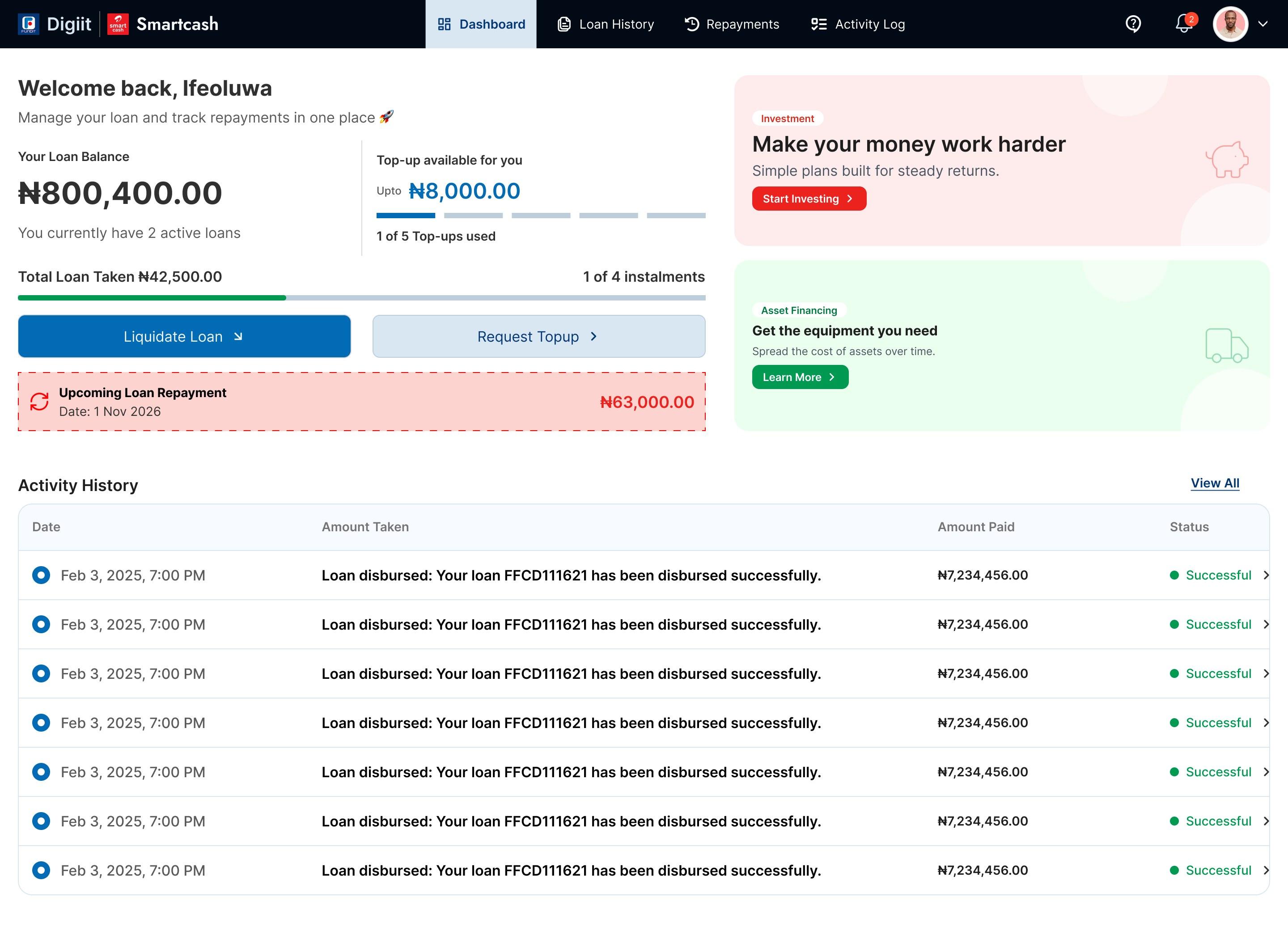
[1] Employee home.
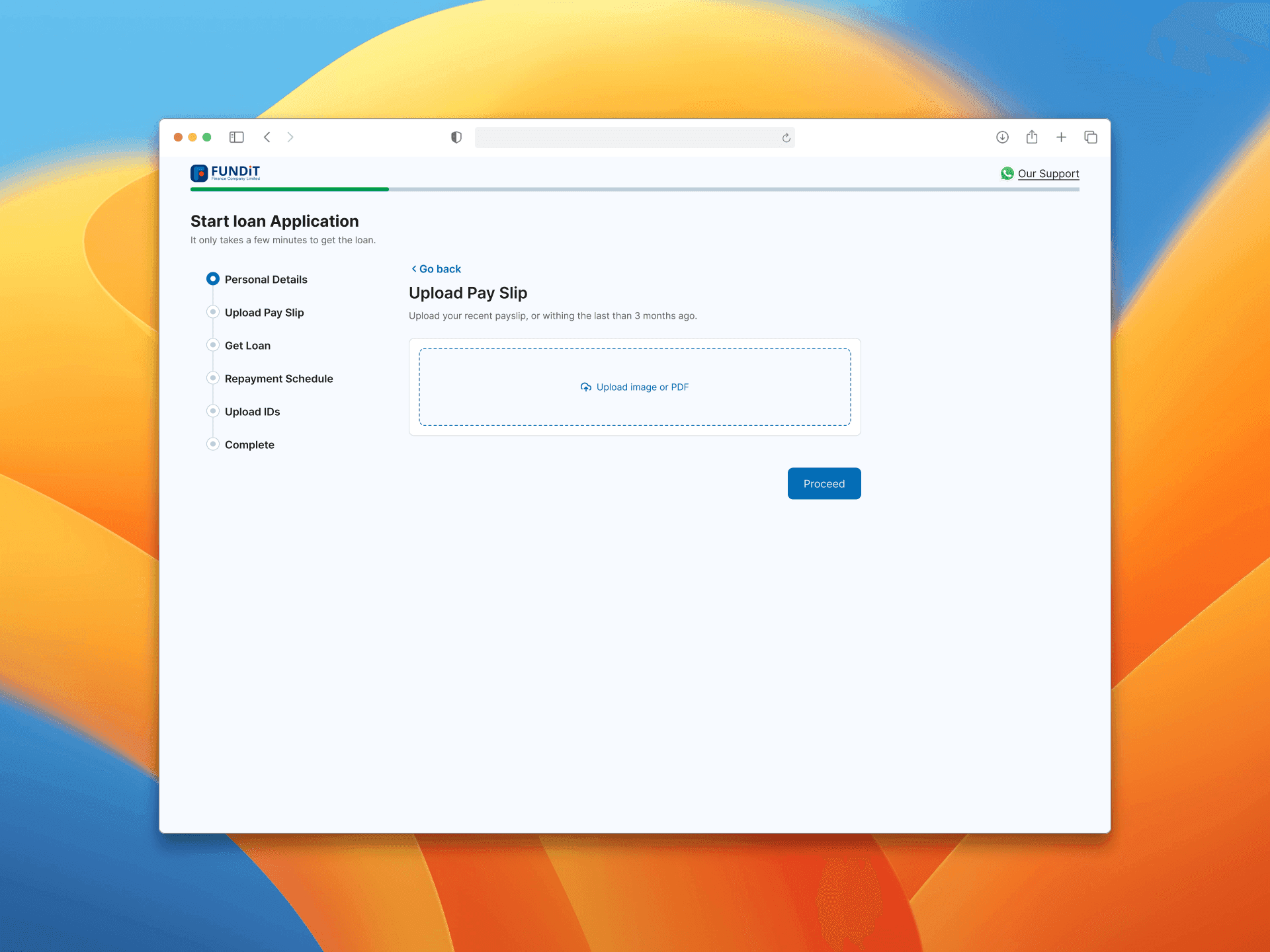
Employees see what they owe, their next repayment date and how much more they can borrow, so they no longer call the office to ask.
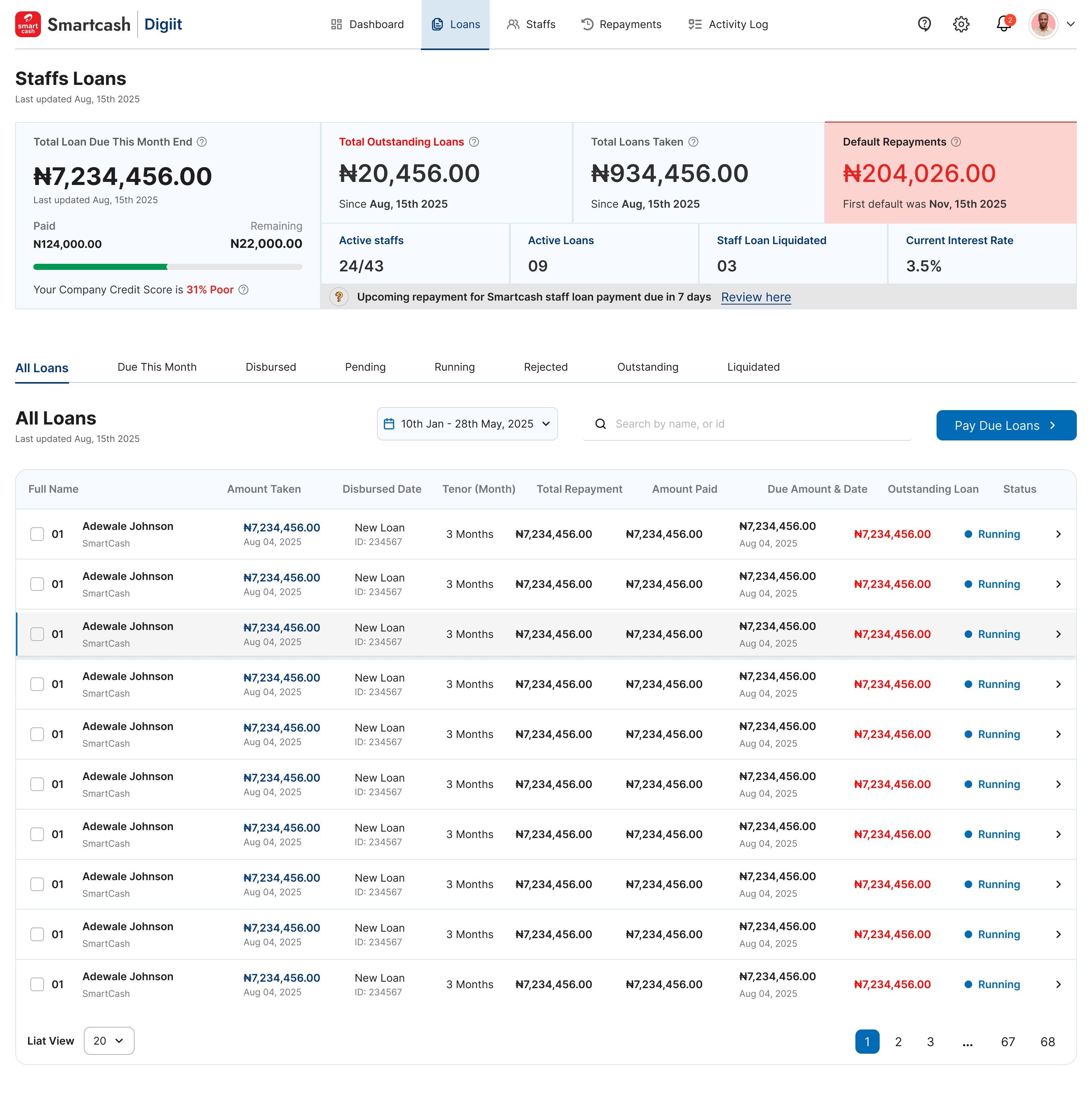
[2] Company HR home.
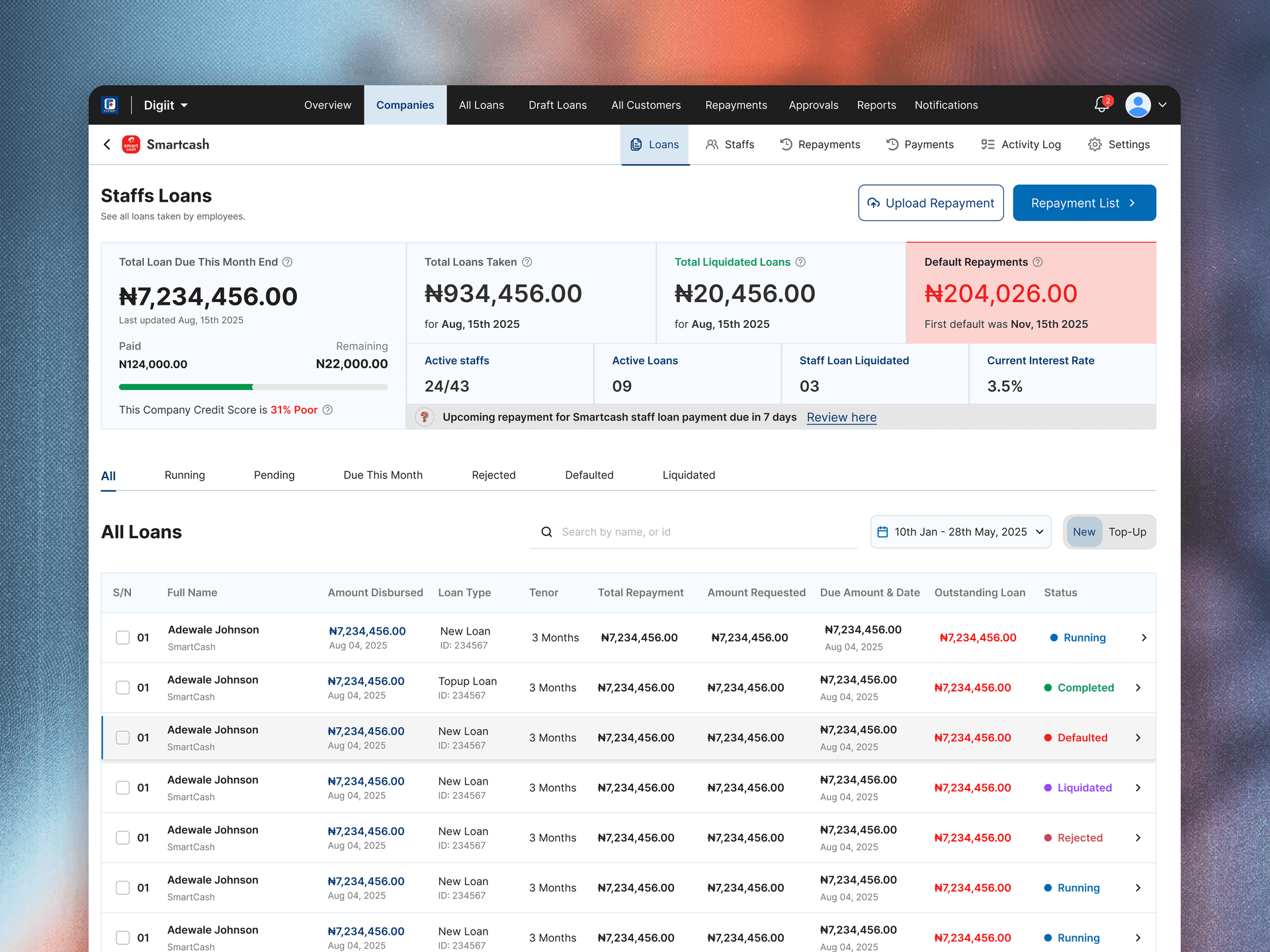
HR teams approve staff eligibility and track payroll deductions in one place. This dashboard didn't exist before, so I designed it from scratch.
Sitemap and user flows.
How the three home screens connect, and the paths for applying, approving and repaying.
Moodboard.
Before designing, I gathered references from fintech and dashboard products on one board to set the visual direction, and kept it as the reference for the rest of the project.
Where we started.
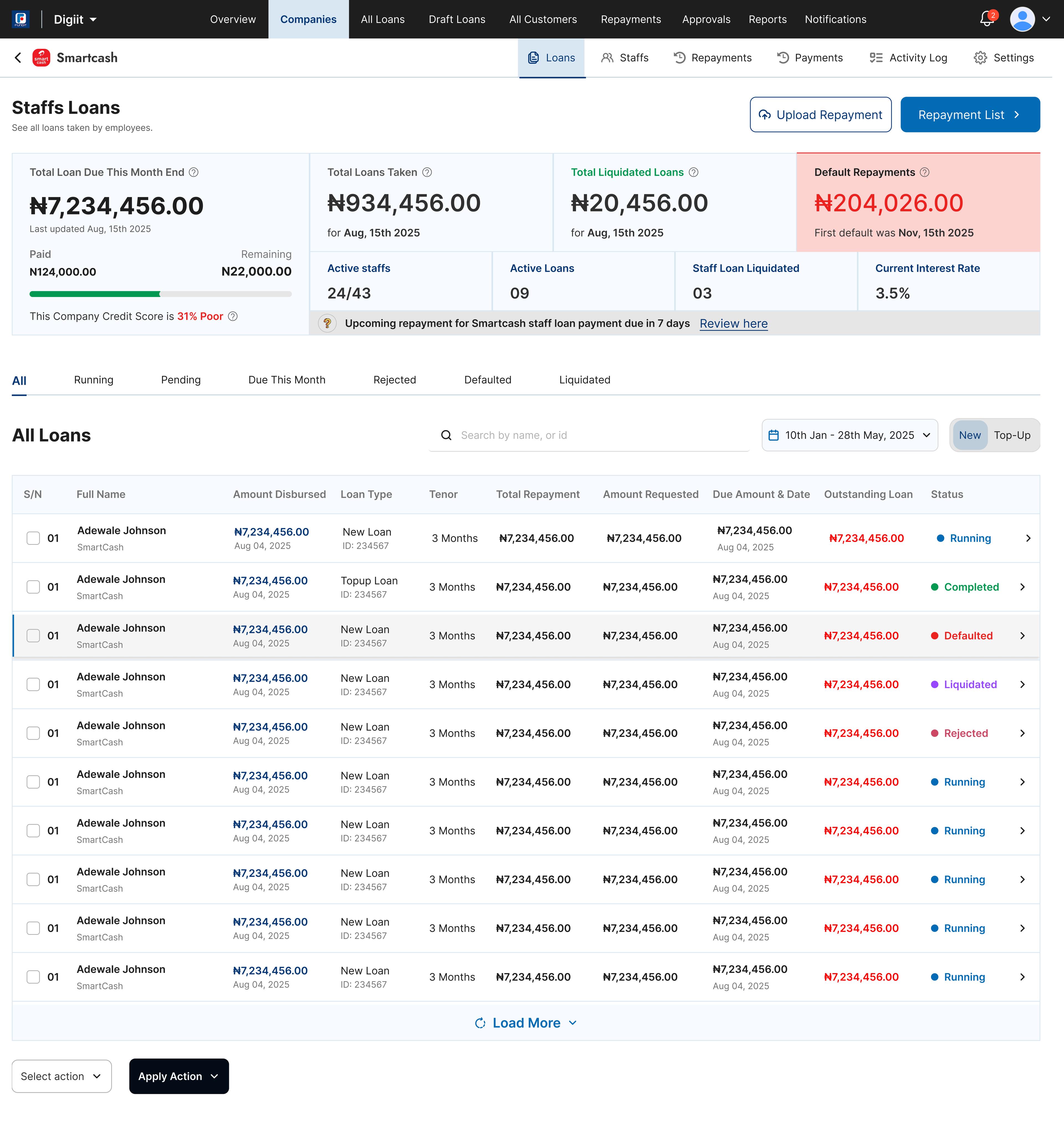
The developer-built MVP showed raw tables and little else.
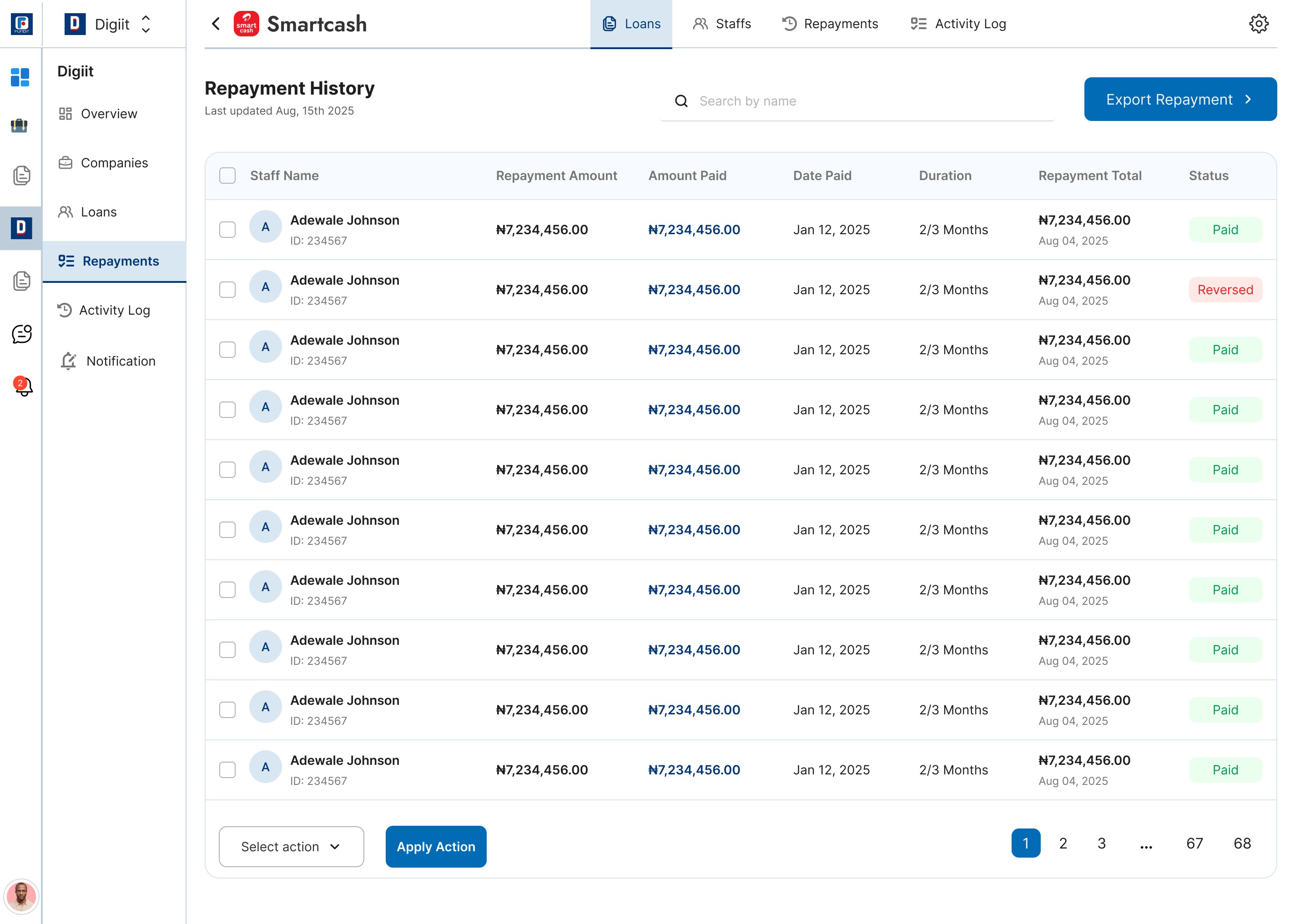
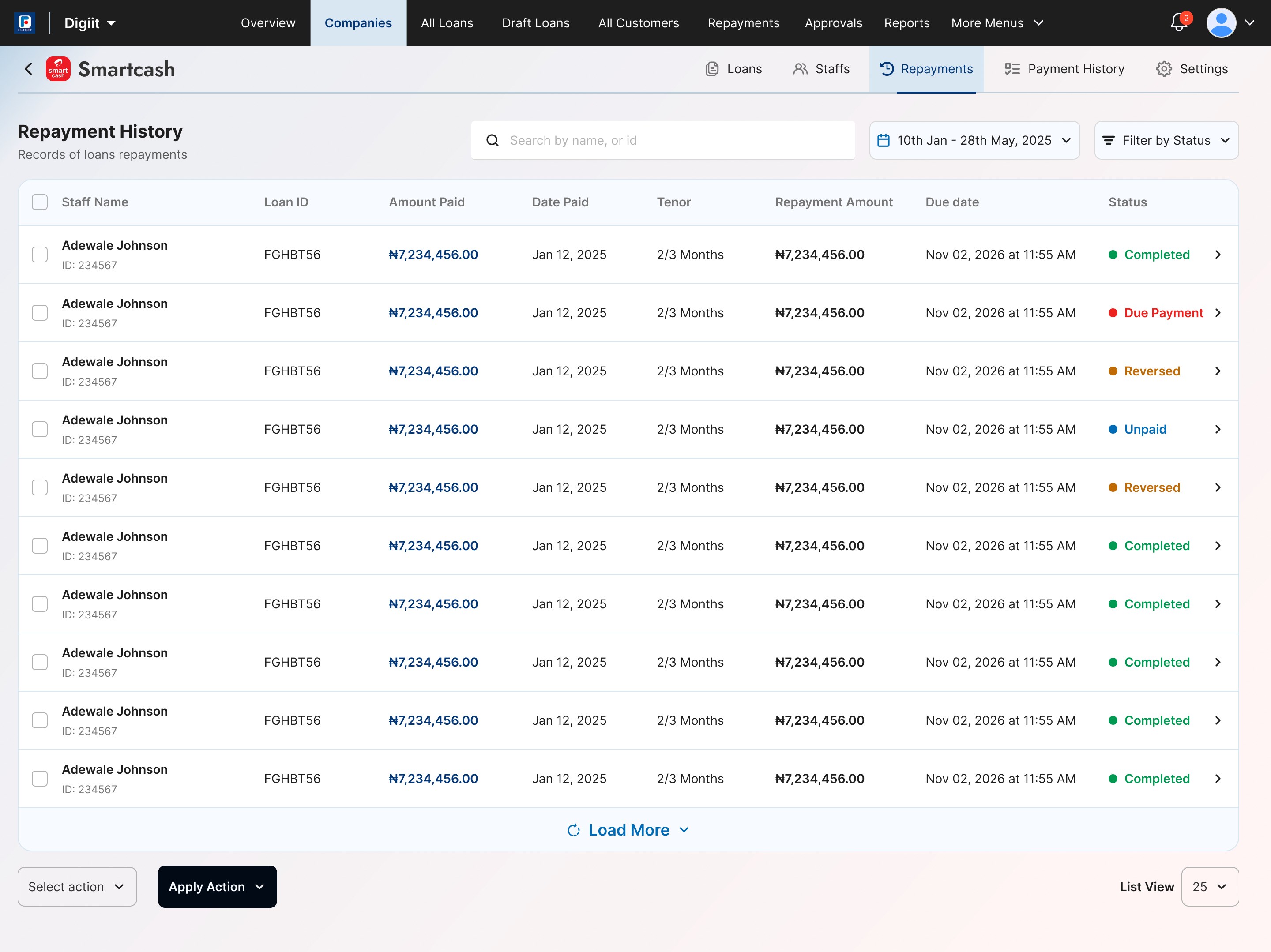
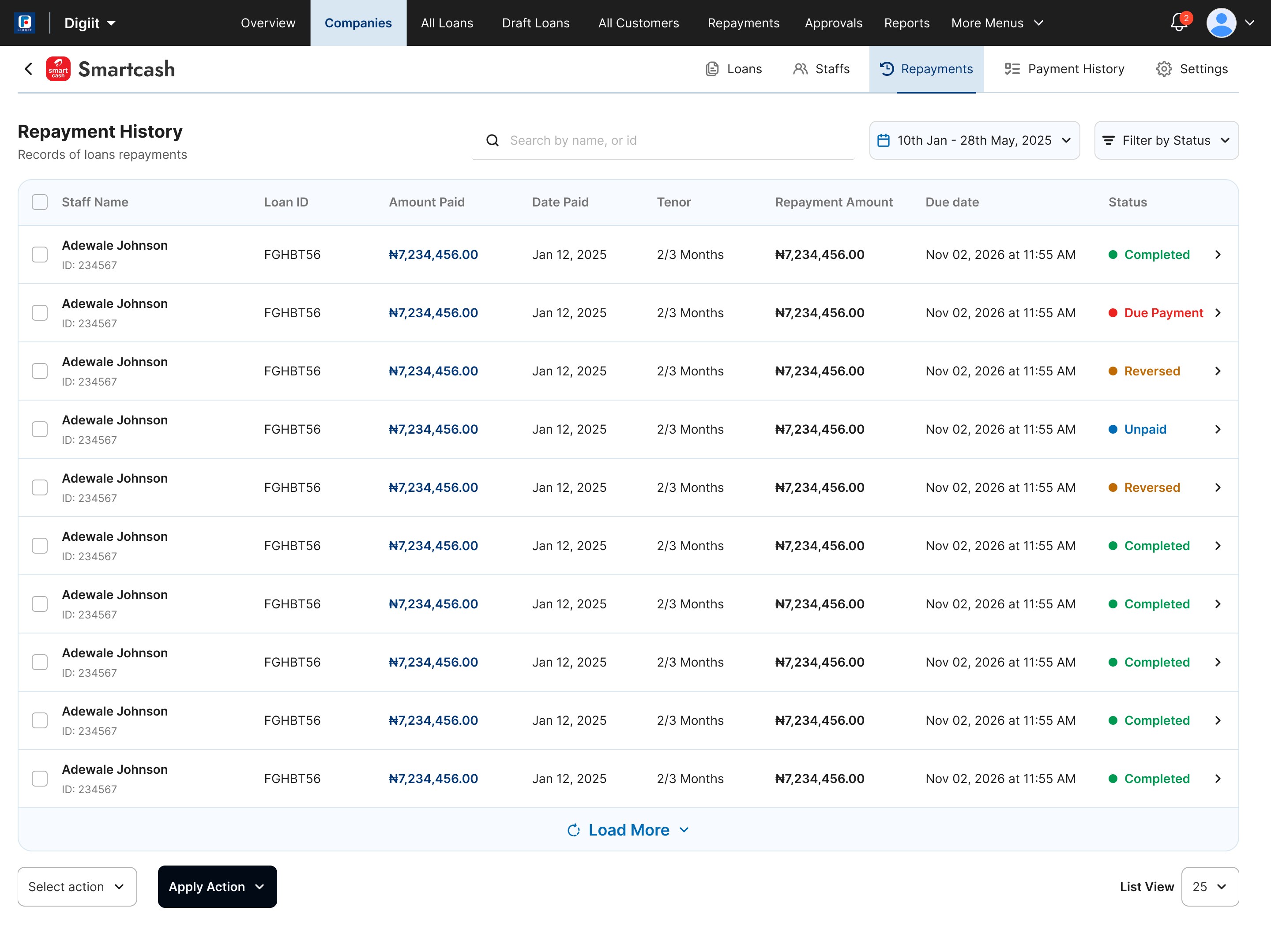
Options considered for the internal management dashboard layout for the 8 products.
Easy to jump to any product and its pages, but too little room left for the tables to show the important data.
Top menus on a light brand gradient, each product its own workspace.
Cleaner and easier to navigate, and each person sees only what they act on.
Design system
With one month to design all three dashboards, I started from the free Untitled UI design system on the Figma Community and adapted it for Digiit: dense financial tables, status pills and a green, amber and red loan-health language.
I'm now building a global design system for all of FUNDiT's products.
Validation
Before rollout, we presented the final dashboards live to the operations team lead. Their feedback became the next feature requests: auditing data and reconciling it with our core banking system. Our contract with the partner company we'd onboarded didn't allow a demo before launch, so we deployed and tracked what came in through customer support.
Outcome
Self-service took pressure off support, and a small view became a sales tool.
What design drove
- New corporate partners joined the platform.
- Employees take out and track their own loans.
- HR teams manage their staff's loans easily.
- Far fewer customer support requests.
- No more paperwork, and no more Excel to manage loans.
- A clear loan overview for operations, sales and stakeholders.
What I learned
Support messages and tickets are research a company already owns. They showed what people needed faster than direct customer interviews.
Users often don't know what they really need until they start using a product.